Ready to turn your passion for dogs into your profession?
Becoming a certified dog trainer is one of the most rewarding career paths available—but it requires more than just loving dogs.
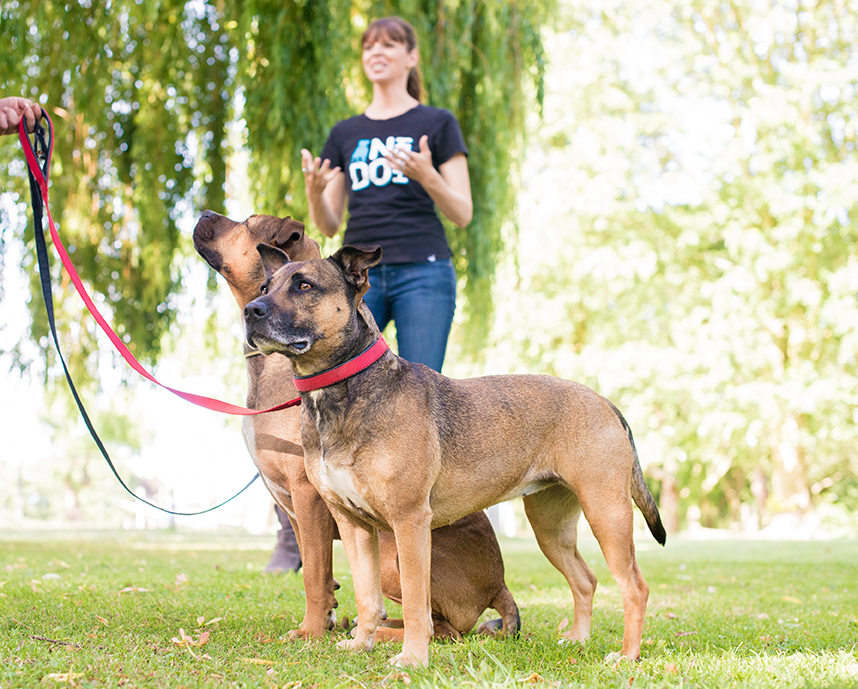
As a career, dog training blends teaching, science-led understanding, empathy, communication, and hands-on skill, all in service of improving the lives of dogs and the people who love them.
This brief guide will walk you through what’s involved in becoming a dog trainer: the skills and mindset you’ll need, the importance of positive, force-free training methods, and how to choose an education path that prepares you for real-world success.
What Does a Professional Dog Trainer Actually Do?
A modern dog trainer does far more than teach sit, stay, and come. Professional trainers work at the intersection of behavior science, learning theory, and human coaching.
Depending on your focus, you may:
- Teach basic manners and life skills
- Help families raise well-adjusted puppies
- Address common behavior challenges like leash reactivity or separation anxiety
- Coach clients on communication, consistency, and realistic expectations
- Support animal shelters or service dog organizations
- Collaborate with veterinarians or behavior professionals
At its core, dog training is about teaching and supporting both people and animals, while using ethical, evidence-based methods that support optimal welfare for both ends of the leash.
VSA takes this concept further than most other dog trainer schools, using Victoria’s Positively Pillars and Harmony Model as a guiding force to truly understanding and appreciating the dog’s life experience while working with the full dog-human team to resolve behavior issues and set them both up for success solving real-world problems.
Good dog trainers also often serve as behavior counselors for the human clients as well, helping them understand dog behavior while targeting reachable goals and encouraging compliance and consistency.
Is Dog Training the Right Career for You?
Before diving into how to become a dog trainer, it’s important to reflect on whether the work itself aligns with your strengths and interests.
Many students applying to dog trainer schools like VSA do so while sharing that they “like dogs, but people not so much.” While this is a common theme, it runs the risk of falling into a trap that can actually work against those angling to level up their dog training and behavior business.
While good dog trainers obviously do connect with and understand dogs while communicating with them, the best ones also commit to working successfully with their human clients as well. This can include important soft skills such as motivational interviewing, empathetic approaches, and high-level listening capabilities.
Ultimately, the dog’s most important trainer throughout its life will be its guardian, so a big part of a good professional dog trainer’s job is to provide the human side of the leash with the skills, knowledge and confidence to initiate positive change while ensuring they have a mindset and approach to understanding the importance of considering the dog’s life experience and best interests in combination with their real-world needs.
Good dog trainer schools include the teaching of these critical skills at a high level for all new and existing dog training students.

Helpful Traits That Support Success as a Dog Trainer
Most successful trainers share these all-important qualities:
- Genuine curiosity about how dogs think, feel, and learn
- Strong observational and communication skills
- Patience with both dogs and their guardians
- Creative problem-solving abilities—every dog is unique
- Willingness to keep learning throughout your career
You don’t need to be born with special instincts or a “natural gift.” Professional dog training is a learned skill set—what matters most is your ability to observe carefully, think critically, and work collaboratively with both dogs and people.
When considering which dog trainer academy or institution to choose for your education and certification, ensure that its curriculum goes well beyond helping teach clients to get their dogs to do – or not do – certain things. The best modern dog trainers share a commitment to thinking outside the box while developing training plans designed to respect the dog’s life experience while accomplishing the real-world goals of their human clients.
What Else Do You Need to Become a Professional Dog Trainer?
Real-world experience through access to dogs is an essential part of learning how to become a dog trainer.
During your education, you’ll benefit from:
- Working with different breeds, ages, and temperaments
- Observing common behavior challenges
- Practicing communication with real clients
This experience may come through personal networks, shelters, foster programs, or supervised training opportunities integrated into your education.
Why Choosing Positive (Force-Free) Training Is Essential
One of the most important decisions you’ll make as a future professional is how you choose to train.
Positive, force-free dog training focuses on:
- Reinforcing behaviors we want to see more often
- Teaching skills through clear, humane communication
- Managing environments to prevent problems before they start
- Avoiding pain, intimidation, or fear-based techniques
This approach is grounded in modern behavioral science and supported by leading veterinary and animal welfare organizations.
Research consistently demonstrates that reward-based training methods are more effective than punishment-based approaches. Multiple studies show dogs trained with positive reinforcement display fewer problem behaviors like aggression, fear, and anxiety, while punishment-based methods have been linked to increased aggression and fearful behavior.
Avoid the Risks of Punishment-Based Methods
Training approaches that rely on aversives—such as shock collars, physical corrections, or intimidation—can:
- Increase fear, anxiety, and stress
- Damage trust between dogs and humans
- Suppress behavior without resolving underlying causes
- Lead to fallout behaviors, including aggression
As a professional dog trainer, your responsibility goes beyond achieving short-term results. Ethical practice means prioritizing welfare, emotional safety, and long-term behavior change.
Leading professional organizations, including the American Veterinary Society of Animal Behavior (AVSAB), the American College of Veterinary Behaviorists (ACVB), and the UK Dog Behaviour and Training Charter clearly state that reward-based learning offers the most advantages and least harm to the learner’s welfare.
Education Matters: Being a Dog Lover Isn’t Enough
A common misconception about how to become a dog trainer is that personal dog ownership or informal experience is sufficient.
To work professionally and responsibly, you need a solid educational foundation that includes:
- Learning theory and behavioral science
- Canine body language and communication
- Ethology and the evolutionary history of dogs
- Humane behavior modification strategies
- Training mechanics, timing, and reinforcement
- Client education and coaching skills
Dog training is a profession. Like any profession, it requires structured study, supervision, and accountability.

How to Choose a Dog Trainer Education Program
Not all dog trainer education programs are created equal. Choosing the right program is one of the most important steps in becoming a competent, confident professional.
When evaluating how to become a dog trainer through formal education, look closely for the following elements.
- A Science-Based, Force-Free Dog Training Curriculum
A credible program is firmly rooted in modern behavioral science and humane training principles. The dog training school you choose should help you understand why dogs behave the way they do, and how they perceive the world, not just how to manipulate behavior. Coursework should clearly explain
- Depth of Education Beyond Basic Dog Training Skills
Strong programs go beyond basic cues and class management. They include:
-
- Applied learning theory
- Behavior analysis
- Emotional states and stress signals
- Prevention and early intervention strategies
This depth is essential for working with real-world behavior challenges.
Programs such as the Victoria Stilwell Academy are designed around this kind of comprehensive education, combining scientific foundations with practical application rather than offering quick or superficial certifications.
- Hands-On Dog Training Experience Built Into the Program
Theory alone doesn’t create skill. Look for programs that require consistent hands-on training with a variety of dogs, allowing you to practice, make mistakes, and improve under guidance. You could be asked to submit videos or demonstrate training live, whether in person or in an online or virtual format.
- Personal Mentorship and One-to-One Support
This is where many programs fall short, but it’s arguably the most valuable component. Having a dedicated mentor or Faculty Advisor—an experienced professional trainer who guides you individually—makes the difference between struggling alone and truly mastering your craft.
Look for a program that provides regular one-on-one support through video conferences where you ask questions, get personalized feedback, and discuss real challenges. Personalized feedback helps you refine technique, problem-solve complex cases, and develop professional judgment—skills that can’t be learned from prerecorded material alone.
- Meaningful Assessments, Milestones, and Skill Evaluation
Quality programs include periodic skills assessments where you demonstrate your growing abilities. These checkpoints—conducted by your mentor through video or live demonstration—ensure you’re developing practical competence, not just absorbing information.
Be cautious of programs that offer instant certification. Reputable education includes:
-
- Clear learning objectives
- Skill-based assessments
- Opportunities to revise and improve
Assessment protects dogs, clients, and the profession by ensuring graduates can apply what they’ve learned. Reputable programs treat certification as a professional standard to be earned, not a participation trophy.
- Flexible Learning That Fits Your Life
The best modern programs offer engaging online platforms where you can access high-quality instruction from leading experts whenever fits your schedule—whether that’s during lunch breaks or late at night when inspiration strikes.
- Human Psychology and Business Skills
Dog training is as much about working with people as with dogs. Strong programs include substantial content on teaching classes, working with clients, and if you’re building your own business—marketing, pricing, and business management. The people management modules of VSA’s course, for example, helps prepare graduates for the realities of working in the dog training industry.
- A Supportive Dog Trainer Community
Dog training can be challenging work. Look for programs that connect you with fellow students and alumni. This network becomes invaluable for ongoing support, collaboration, and continued learning long after graduation. Programs that foster connection with peers and mentors help reduce isolation, support ethical decision-making, and encourage continued growth long after graduation.
- Certification and Professional Credibility
Dog training is not universally regulated, which makes education quality even more important.
Professional certification:
-
- Signals commitment to ethical, force-free practice
- Builds trust with clients and referral professionals
- Demonstrates accountability and competence
- Encourages ongoing continuing education
When researching how to become a dog trainer, be wary of programs that promise quick or guaranteed credentials without rigorous evaluation.
- Business & Communication Skills for Building a Sustainable Career as a Dog Trainer
Professional training skills are only part of the picture. Long-term success also depends on:
-
- Clear communication with clients
- Ethical boundaries and professional standards
- Continued learning and mentorship
- A realistic understanding of sustainable business practices
Many trainers combine income streams, going on to offer private consultations, teach group classes, run practices, work with shelters, or collaborate with veterinary teams. Strong education prepares you for these realities—not just ideal scenarios.
Why the Right Education Makes All the Difference
If you’re serious about learning how to become a dog trainer, the program you choose will shape your skills, ethics, and confidence.
The strongest programs integrate:
- Science-based, force-free training
- Ethological and historical context
- Extensive hands-on practice
- Individual mentorship
- Meaningful assessment
- Professional skills development
- A supportive continuous learning community
This comprehensive approach reflects how real professionals are trained—and how dogs and clients are best served.
Taking the Next Step
Becoming a professional dog trainer is not about shortcuts. It’s about committing to learning, practicing ethically, and holding yourself to high standards.
When you choose an education path grounded in science, compassion, mentorship, and accountability, you’re not just learning how to train dogs—you’re joining a profession dedicated to improving lives.
For those exploring how to become a dog trainer through modern, force-free education, the right program will make its values, structure, and support unmistakably clear from the start.
FAQ: How to Become a Dog Trainer
How long does it take to become a dog trainer?
Becoming a professional dog trainer typically takes several months to a few years, depending on the depth of education, hands-on experience, and mentorship involved. High-quality programs focus not only on learning theory, but also on supervised practice, assessment, and professional development. Dog training is a skilled profession, and meaningful preparation takes time.
Do you need certification to be a dog trainer?
Dog training is not legally regulated in many regions, but professional certification is strongly recommended. Certification demonstrates a commitment to ethical standards, science-based methods, and ongoing education. It also helps clients, veterinarians, and other professionals identify trainers who meet recognized competency benchmarks.
What qualifications should a professional dog trainer have?
A qualified professional dog trainer should have:
- Education in learning theory and canine behavior
- Training grounded in positive, force-free methods
- Supervised hands-on experience with a variety of dogs
- Assessment-based certification
- Ongoing continuing education
Programs that combine scientific knowledge with mentorship and practical application best prepare trainers for real-world work.
What is the best way to become a dog trainer?
The most effective way to become a dog trainer is through a structured, science-based education program that emphasizes positive reinforcement, hands-on experience, and professional mentorship. Learning from experienced trainers, receiving feedback, and being assessed on practical skills helps ensure both competence and ethical practice.
What should I look for in a dog trainer education program?
When choosing a dog trainer education program, look for:
- A force-free, science-based curriculum
- Regular hands-on training with dogs
- Dedicated professional mentorship
- Meaningful assessments and skill evaluations
- A supportive learning community
Programs such as the Victoria Stilwell Academy are designed around these principles to help students develop confidence, competence, and professional integrity.
Is positive reinforcement dog training better?
Positive reinforcement training is widely supported by modern behavioral science and veterinary organizations. It focuses on teaching desired behaviors without using fear, pain, or intimidation. This approach promotes learning, trust, emotional safety, and long-term behavior change—making it the ethical standard for professional dog trainers.
Can you make a living as a dog trainer?
Professional dog trainers pursue a variety of business models, and many build sustainable careers through a combination of private training, group classes, dog walking, shelter work, consulting, and other services. A successful career is built over time through quality education, practical experience, communication skills, and ongoing professional development—not quick certification or shortcuts.
Is online dog trainer education effective?
Online education can be effective when it includes mentorship, assessment, and hands-on practice requirements. Programs that combine distance learning with real-world training, feedback from professional mentors, and structured evaluation can prepare students for professional work. Fully self-directed or unassessed courses are far less effective.