Millions of dog guardians now ask chatbots for training advice. Here’s where AI helps, where it falls short, and why the human side of dog training matters more than ever.
Key Takeaways
- Nearly half of U.S. pet owners now use AI for pet advice, and half of those users ask about behavior.
- AI learns from the internet, which still contains outdated dominance and punishment-based advice.
- Research links punishment-based training to higher stress and a more pessimistic outlook in dogs.
- AI answers the question you ask. A skilled trainer asks why the behavior is happening.
- AI can support good training, but it can’t watch your dog, read the room, or coach you through change.
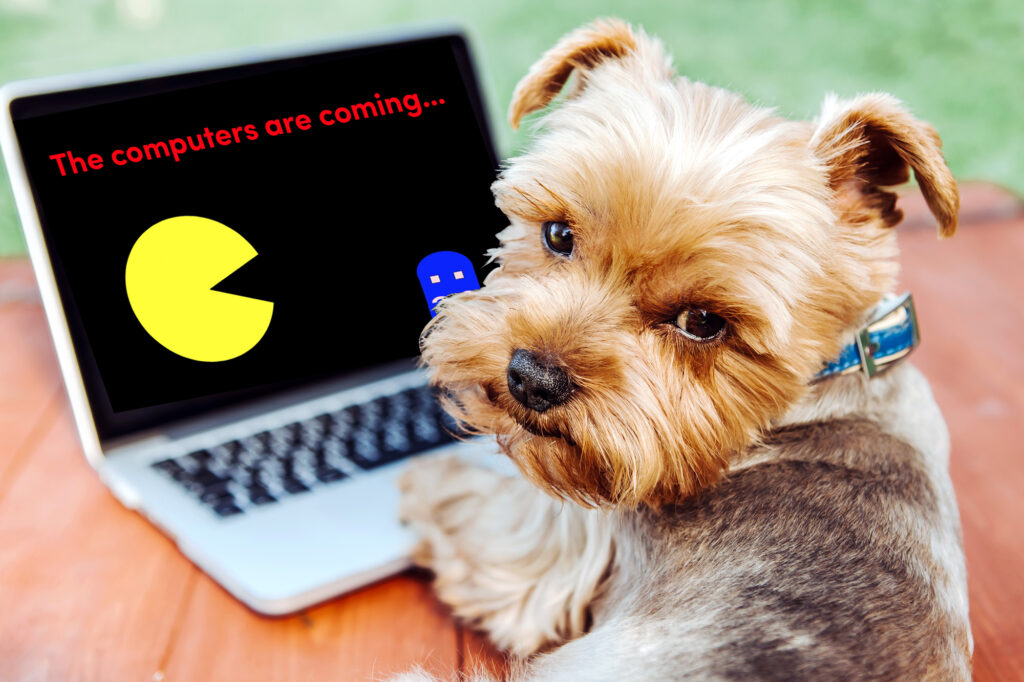
Ask an AI chatbot why your dog growls at visitors, and you’ll get an answer in seconds. It may even be a good one. But it won’t see your dog’s ears pin back when the doorbell rings. It won’t notice that he limps a little on cold mornings. And it won’t ask what happened the last time a stranger reached for him.
That’s the gap. AI answers the question you ask. A skilled trainer asks why the behavior is happening in the first place.
How Many Pet Owners Are Asking AI About Their Dogs?
More than you might think. A survey of 2,000 U.S. pet owners, conducted by Talker Research for Darwin’s pet food in April 2026, found:
- 43% have used AI tools like ChatGPT for pet health or nutrition information.
- 50% of those users ask AI about pet behavior.
- 59% say they’ve changed how they care for their pet based on AI recommendations.
- Only 27% trust AI advice as much as advice from human experts.
The trend isn’t limited to the U.S. In the UK, RSPCA data show that behavior and body language advice is one of the most common reasons owners turn to AI, cited by 49% of those who use it.
In other words, AI is already shaping how many dogs are trained. The question is whether it’s shaping that training well.
Why Should You Trust VSA on This Question?
The Victoria Stilwell Academy for Dog Training & Behavior (VSA) was founded by Victoria Stilwell, the dog trainer and behavior expert best known for the TV series It’s Me or the Dog. Our faculty work with dogs and their people every day, and our graduates run training businesses, volunteer with shelters, and support therapy and service dog teams around the world.
What Does “Force-Free” Training Mean?
VSA teaches force-free methods built on positive reinforcement. That means giving a dog something they like, such as a treat, toy, or praise, right after a behavior so they’re more likely to repeat it. The opposite approach uses aversive methods: something the dog dislikes, such as leash jerks, shock or prong collars, or physical intimidation, to stop or force a behavior.
Does Force-Free Training Actually Work?
Yes. Research shows it delivers strong results without the serious risks of aversive methods.
- It gets better results. In a 2020 University of Lincoln study, dogs trained with rewards responded to “come” and “sit” on the first cue more often than dogs trained with e-collars, and needed fewer repeated commands.
- Aversive methods can trigger aggression. In a 2009 University of Pennsylvania survey of owners whose dogs had behavior problems, confrontational techniques provoked aggressive responses in many dogs: 43% after being hit or kicked, 31% after an “alpha roll,” and 30% after being stared down. Reward-based approaches rarely did.
Why Does VSA Look Beyond Training Cues?
Most dog training focuses on operant learning, which teaches a dog that certain actions lead to certain outcomes. VSA goes further. Behavior doesn’t happen in a vacuum. It’s shaped by the whole dog:
- physical health and pain
- emotional state, including fear, stress, and frustration
- daily routine, exercise, and sleep
- enrichment and outlets for natural behaviors like sniffing and chewing
- the home environment and relationships with people and other pets
A dog who growls may need a vet check, more rest, or a calmer walking route, not just a new cue. As one VSA graduate describes it, the curriculum teaches trainers to look at the dog holistically.
That whole-dog view is exactly what’s at stake with AI. Chatbots tend to treat behavior as a problem to fix with a technique, and they don’t always tell you whether that technique is force-free or aversive.
What Can AI Actually Do Well for Dog Guardians?
AI isn’t the enemy. Used thoughtfully, it can be a helpful assistant. For example, it can:
- Explain basic concepts, such as what a marker word is or how a dog’s nose works.
- Help you brainstorm enrichment ideas for a rainy day.
- Draft a simple training log or reminder schedule for homework between sessions.
- Help trainers handle routine business tasks, such as organizing notes or drafting client emails.
The trouble starts when guardians treat AI as the trainer rather than a tool.
Where Does AI Dog Training Advice Go Wrong?
AI language models learn by absorbing huge amounts of text from the internet. That’s both their strength and their weakness. The internet is full of dog training advice, and much of it is outdated. Programmers have an old saying for this: “garbage in, garbage out.” An answer is only as good as the information behind it.
Here are three common ways AI advice can lead guardians astray.
1. It can repeat popular myths as if they were facts
Ideas like being the “alpha,” “pack leader,” or “dominant” over your dog are still widespread online. Modern behavior science doesn’t support them. Dominance is a real term, but it describes how two animals relate over a specific resource, like a favorite toy or resting spot. It isn’t a personality trait, and it doesn’t mean your dog is trying to take over your household.
When AI repeats “alpha” language, it can steer guardians toward confrontation, which often makes fear and aggression worse.
2. It can skip the medical question
Sudden behavior changes, such as new growling, restlessness, or house soiling, can signal pain or illness. A Vetster veterinarian who tested ChatGPT pointed out that AI isn’t observing the dog, assessing the home, or professionally evaluating the behavior. A good trainer knows when to say, “Let’s check with your vet first.”
3. It can jump to training when your dog needs management first
Management means arranging your dog’s environment to prevent problem behavior right now. Think baby gates, a closed curtain, or a quieter walking route. Training is the longer-term work of changing how your dog feels and responds. One VSA graduate puts it this way: the first step is hearing the guardian’s problem and offering an immediate solution through management. Training comes next. AI often skips straight to commands.
What Does Punishment-Based Advice Cost a Dog?
This isn’t just a philosophical debate. In a 2020 study published in PLOS ONE, researchers at the University of Porto observed 92 companion dogs from seven training schools. They found:
- Dogs trained with aversive and mixed methods showed more stress behaviors, such as crouching and yelping.
- Those dogs also had greater increases in the stress hormone cortisol after training than dogs trained with rewards.
- Dogs from aversive schools responded more pessimistically to ambiguous situations, a sign that the effects reached beyond training sessions.
So when AI confidently suggests a leash “correction” or a shock collar, the cost is real, and it’s paid by the dog.

What Does a Human Trainer Do That AI Can’t?
Dog training is emotional, personal work. For most of us, our dogs are family, and behavior problems can be exhausting and even heartbreaking. Here’s how AI and a qualified trainer compare:
| Task | What AI can do | What a qualified trainer adds |
| Explain basic concepts | Gives quick, general definitions | Connects concepts to your dog’s history and needs |
| Read body language | Describes common signals in text | Watches your dog in real time and spots subtle changes |
| Assess the cause | Lists possible explanations | Asks follow-up questions and flags pain or medical issues |
| Build a plan | Suggests generic steps | Sets up management first, then a plan matched to your dog |
| Adjust as you go | Responds only to what you type | Changes course mid-session when your dog is stressed |
| Support the human | Offers encouragement in text | Coaches you through frustration, setbacks, and family dynamics |
A great trainer reads the signals in the room, from the dog and the people. They notice when a guardian is overwhelmed, when a child is nervous, or when a dog needs a break. As Emily Ohara says, dog training is a lot about the people, not just the dogs.
How Can You Tell Whether AI Dog Advice Is Safe to Follow?
If you use AI for dog questions, run its answers through this quick checklist:
- Does it suggest causing pain, fear, or intimidation? If so, skip it.
- Does it use words like “alpha,” “pack leader,” or “dominance” to explain your dog’s behavior? Be skeptical.
- Does it ask about your dog’s health, or suggest a vet visit for sudden changes? Good advice usually does.
- Does it start with management before training? That’s a good sign.
- For fear, aggression, or bite risk, does it recommend a credentialed, force-free professional? It should.
Is Dog Training Still a Good Career in the Age of AI?
Yes, and the data back it up. In the Talker Research survey, pet owners ranked professional credentials (57%) as the most trusted signal when deciding whose advice to follow. Just 11% named the accuracy of AI-generated responses as a top trust factor.
As AI floods the internet with instant answers, guardians need someone who can sort good advice from bad and apply it to their real dog in their real home. That makes skilled, ethical trainers more valuable, not less.
VSA’s mission is to serve the curious, ambitious, and driven who are called to work with dogs professionally. Our students learn how dogs experience the world, how to build trust with both dog and guardian, and how to create plans that last beyond a single session. No chatbot can do that.
Frequently Asked Questions
Can ChatGPT train my dog?
No. AI can explain general concepts, but it can’t observe your dog, adjust in real time, or coach you through the process. Training happens between you and your dog, ideally with support from a qualified, force-free trainer.
Is AI dog training advice safe?
Sometimes. AI can repeat outdated methods, including punishment-based advice that research links to stress in dogs. Check every answer against the checklist above, and consult a professional for serious issues.
Will AI replace dog trainers?
Unlikely. AI can handle general information and admin tasks, but dog training depends on observation, judgment, and relationships. Pet owners still rank professional credentials as their most trusted signal.
What should I do if AI advice conflicts with my trainer’s advice?
Follow your trainer. They know your dog. If you’re unsure, ask them about the AI suggestion. A good trainer will explain why it does or doesn’t fit your situation.
How do I find a qualified positive reinforcement trainer?
Look for a dog trainer certified by a reputable, force-free program, and ask directly what tools and methods they use. In most places, anyone can call themselves a dog trainer, so credentials matter.
Sources
- Talker Research: 3 in 5 say AI recommendations changed how they care for their pet (2026)
- Vet Times: Owners increasingly turn to AI for care advice (RSPCA data)
- Vieira de Castro et al. (2020), Does training method matter? PLOS ONE
- Vetster: Can ChatGPT be trusted for pet health advice?
- Herron, Shofer & Reisner (2009), Applied Animal Behaviour Science, via ScienceDaily
- China, Mills & Cooper (2020), Frontiers in Veterinary Science