Veterinary Zones Approach™ Course
Safer, Smoother Appointments for Dogs, and More Sustainable Workdays for Your Team…
…Starting with Changes That Take Less Than a Minute
Build on the care your clinic already provides
Every veterinary professional knows the moment. The dog seemed fine at intake. The exam started smoothly. Then, seemingly out of nowhere, the dog growls, snaps or fights to get off the table.
Afterward, you wonder what you missed and whether the next visit will be harder.
Everyone working in the clinic knows that pressure rarely ends with one challenging appointment. It’s the back-to-back cases with no time to breathe, the missing behavior note, the muzzle you can’t find, the plan that changes mid-exam. You could be running on empty when the next fearful dog walks in.
If you’ve ever felt caught between the care a dog needs, the time you have, and the safety and well-being of your team, this course was designed for you.
$149 for LIFETIME ACCESS
With bulk seat licenses available for your entire team
What Is the Veterinary Zones Approach™?
 It’s a practical, welfare-forward framework of three zones (Comfort, Tolerance and Discomfort) that reflect one core question: How workable is this situation right now
The Zones Approach considers the whole veterinary visit through the dog’s eyes as well as human eyes, and helps us pinpoint the small adjustments to handling and procedures that can make every appointment safer, smoother and more sustainable for patients, guardians and staff.
Zones aren’t traits of the dog. They describe how the dog is experiencing the visit at that moment. A dog may be in comfort in the parking lot, in tolerance in the waiting room and in discomfort on the exam table. Escalation rarely comes from nowhere.
Once you can see these shifts, you can respond before a dog reaches the growl, the snap or the shutdown.
 The Zones Approach doesn’t replace Fear Free, low-stress handling, cooperative care or positive reinforcement. It creates the conditions that let those skills work. Most of the changes involve decisions, timing and arrangement rather than costly renovations, and many take less than a minute.
The same principle applies to people. Every unclear role, every scramble for equipment and every plan improvised in the room drains attention your team needs for patients.
The Zones Approach looks at both, because the welfare of dogs and the wellbeing of the people caring for them can’t be separated.
This three-lesson course gives your whole team a shared language, a clear decision-making framework and practical changes for every stage of the visit, from the parking lot to the drive home.
Just $199
What This Course Adds to Your Practice:
Immediately applicable
Dozens of quick changes you can use during your next appointment, alongside longer-term improvements to space and protocols
Less burnout, better teamwork
Practical systems that reduce cognitive load, uncertainty and overload, so your team has more capacity for the work they love
Safer for everyone
Dogs who stay within their capacity to cope need less restraint and are less likely to bite
Works with what you already know
Makes Fear Free, low-stress handling and cooperative care more likely to succeed
Real dogs, real clinics
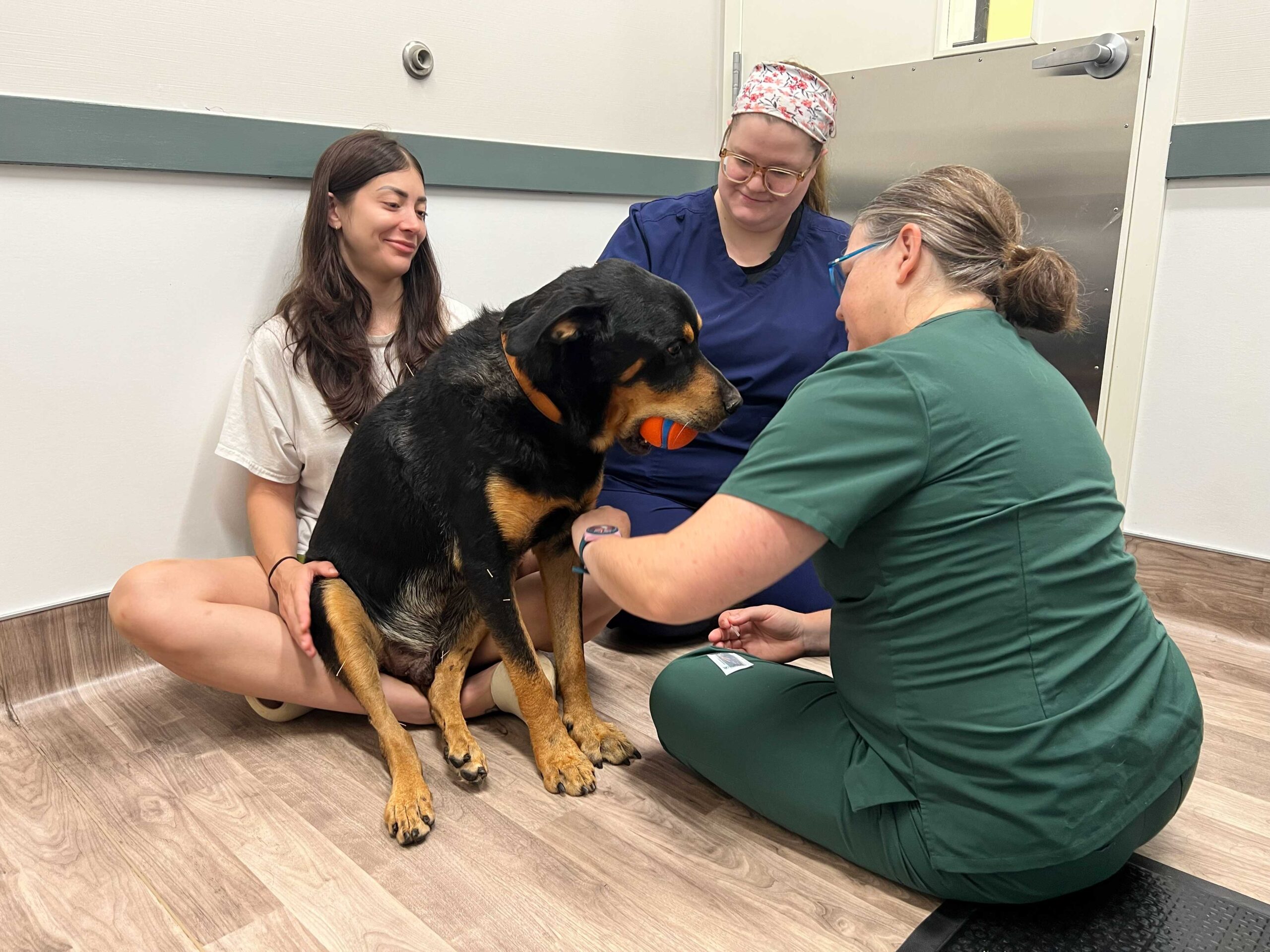
Features footage filmed with the team at Peachtree Hills Animal Hospital in Atlanta
CEU’s available for VSA, CCPDT, IAABC and PPAB
What Makes the Veterinary Zones Approach™ So Powerful?
Behavior is information.
This foundational principle shifts everything.
You’ll learn to see a dog’s behavior not as a problem living inside the dog, but as information about how workable the clinic, the procedure and the interaction are for that dog right now.
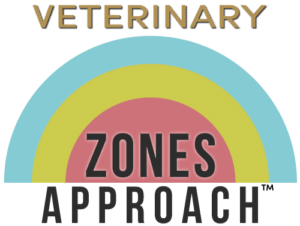
Comfort Zone: Where dogs can explore, eat, move and recover quickly. Learn how to protect it from the moment the dog leaves the car.
Tolerance Zone: The deceptive middle ground, where procedures are still possible but the dog is working hard to cope. Learn to spot it early and adjust before your options narrow.
Discomfort Zone: This is where behavior narrows and risk rises. Learn the five decision options that protect safety and welfare together
Beyond asking “How do we handle this dog?”
VZA also asks “What kind of experience have we created?”
This opens new options, from how your team observes and communicates to how dogs respond at their next visit.
Because a successful visit is one that helps the next visit start better.
Course Structure
Lesson 1: The Veterinary Zones Approach

Behavior as Information, Workability, and Why Escalation Rarely Comes from Nowhere
Learn the three zones and how to tell when a situation is becoming less workable for a dog. Practice spotting transitions between zones with video case studies, and discover five practical decision options for keeping appointments workable. See why safety and welfare aren’t opposing goals, and how every appointment shapes the next.
Lesson 2: Applying the Zones in the Veterinary Clinic

From Parking Lot or Car Park to Exit: Every Transition Is an Opportunity
Follow a dog through every stage of the visit: arrival, entrance, waiting room, exam room, staff entry, examination, handling-sensitive procedures, diagnostics, recovery and exit. For each stage, get permanent clinic improvements, quick changes that take less than a minute, and a clear zones goal. A step-by-step body language assessment models how to move from observation to handling decisions and clear handoffs.
Lesson 3: The Bigger Principle

Better Conditions for Dogs Are Better Conditions for People
Apply the Zones Approach to your team. Drawing on research into veterinary burnout and teamwork, learn how predictability, accessible resources, recovery time, choice, coordination and thoughtful clinic design leave staff with more capacity for their patients. Includes guardian stories and three questions to take back to your clinic.
Your Clinic Toolkit
What You'll Learn
- A practical framework for understanding dog behavior at every stage of the veterinary visit
- How to recognize early shifts from comfort to tolerance to discomfort, before a dog escalates
- Five decision options for responding when a situation becomes less workable
- Quick changes and permanent improvements for every area of the clinic
- How to use minimal restraint, well-timed breaks and food delivery to preserve a dog’s ability to cope
- A shared, observation-based language that improves handoffs between reception, techs, nurses and veterinarians
- System-level changes that reduce cognitive load, uncertainty and burnout across your team
What Your Team Will Experience
- Less time improvising, searching and second-guessing, and more capacity for patients
- Clearer roles and communication across reception, techs, nurses and veterinarians, with less blame
- Permission and a shared language to pause, ask for help or change the plan
- Fewer appointments that escalate into struggle, restraint or bites
- Confidence in making decisions early, while more options remain
- Guardians who trust your team, and dogs who arrive at their next visit better able to cope
Course Features
Practical curriculum designed specifically for veterinary teams
Certificate of completion with CEUs available
Video case studies and body language observation exercises
Real dogs, filmed in working clinic settings
Downloadable resources for immediate implementation
Bulk seat licenses so your whole team can learn together
Self-paced learning on VSA’s premium online platform
Accessible on desktop or mobile
Who Is This Course For?
- Veterinarians
- Veterinary technicians, nurses and assistants
- Reception and client-care staff
- Practice managers and team leads looking to build consistency across the clinic
- Anyone committed to welfare-forward, low-stress veterinary care
Ready to Make Every Visit Easier for Dogs, Guardians and Your Team?
Dogs and the people who care for them shouldn’t have to simply push through difficult conditions. Learn the approach that gives your entire practice, from the front desk to the exam room, the language, the tools and the confidence to make every appointment as workable as possible.
Enroll in the Veterinary Zones Approach today and discover why this isn’t just another handling course. It’s a new way of seeing the visit that helps your team make decisions and care for dogs, and for each other, with more confidence.