Shelter Zones Approach™ Course
Create Safer, More Humane Conditions for Every Dog in Your Care…
…Without Costly Changes
Transform your shelter with the Shelter Zones Approach
Every shelter professional knows the feeling: you approach a kennel with good intentions, and something goes sideways.
The dog escalates. You push through.
Later, you wonder if you handled it right — or if you made things worse.
If you’ve ever felt unsure or emotionally drained by the gap between your best efforts and the outcomes you’re seeing, this course was designed for you.

A practical framework for understanding how dogs experience their environment — and for making every day in the shelter safer, more humane, and more sustainable for both dogs and people.
$49 for LIFETIME ACCESS
With special discounted pricing available for your team
What Is the Shelter Zones Approach?
 The dogs in your care are telling you something with every freeze, every escape attempt, every hard stare, every tail wag. But without the right framework to interpret what they’re saying — and what to do about it — even the most dedicated team can find themselves just getting through it, shift after shift.
The Shelter Zones Approach is a practical, welfare-forward framework for understanding how dogs experience their environment and for guiding staff and volunteers in making day-to-day handling decisions. The Approach organizes dog behavior into three zones — Comfort, Tolerance, and Discomfort — based on how workable the current conditions are for the dog.
 Zones aren’t traits of the dog; they’re descriptions of how the dog is experiencing the environment at that moment. A single dog may be comfortable in the yard, tolerant in the hallway, and in discomfort during kennel entry or leash attachment. Understanding this contextual nature of behavior transforms how you approach every interaction.
Within this framework, behavior is information — not defiance, not failure. A dog that freezes, stiffens, or escalates is telling you the environment has exceeded their current capacity. Your job is not to push through that signal, but to change the conditions that created it.
And because SZA is all about decisions, timing, and environmental arrangement—not specialty equipment or added programming, it works even in under-resourced shelters — often reducing effort rather than adding to it.
This four-lesson course gives shelter staff and volunteers a shared language, a clear decision-making framework, and immediately applicable skills for every stage of a dog’s shelter stay.
Just $49
Why This Course Takes Your Organization to the Next Level:
Immediately applicable
Strategies designed for real shelter environments with real constraints
Low-resource by design
Focuses on decisions, timing, and arrangement rather than equipment or added programming
Real dogs, real shelters
Filmed on-location at real-world working shelter and rescue organization facilities
Restores pride
Redefines success as good decisions made early, not heroics under pressure
Builds team morale
A shared language that travels across shifts, roles, and experience levels
CEU’s available for VSA, CCPDT, IAABC and PPAB
What Makes the Shelter Zones Approach™ So Powerful?
Zones describe conditions — not dogs.
This foundational principle shifts everything.
You’ll learn to see behavior as information about whether the current conditions are workable for the dog — not as a character flaw to manage or a problem to push through.
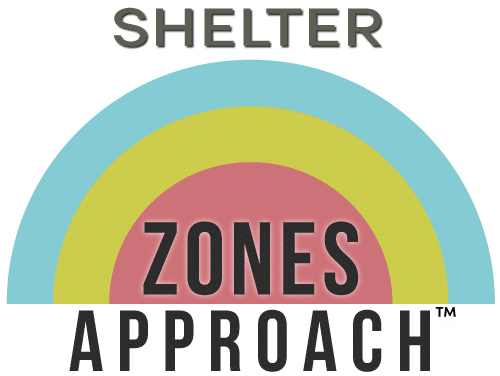
Comfort Zone: Where learning, enrichment, and positive connection actually happen — discover how to protect it, expand it, and recognize it in even the most challenging dogs
Tolerance Zone: The fragile middle ground — master strategies for reducing effort and moving dogs back toward comfort before escalation occurs
Discomfort Zone: Where behavior narrows and risk increases — learn safety practices, protected contact, and predictable exit strategies that prevent rehearsal of high-stress behavior
Instead of asking “What’s wrong with this dog?”
SZA asks “Where and under what conditions is this dog comfortable?”
This changes everything — from how you observe, move, and make decisions, to how you feel at the end of a long shift.
Course Structure
Lesson 1: The Shelter Zones Approach
What the Zones Approach Is, What It Isn’t, and Why You Should Care
Understand the three zones — Comfort, Tolerance, and Discomfort — and why they describe conditions rather than dogs. Learn to read body language as a reflection of the environment, not as a message about the dog’s character or intent. Discover how redefining success as “good decisions made early” restores pride and skill to shelter work.
Lesson 2: Zones in the Kennel

Protect Comfort, Reduce Effort in Tolerance, and Build Recovery Out of Discomfort
Apply the Zones framework directly to kennel life, where conditions are often most demanding. Learn predictability building, distance work, choice-based engagement, protected contact, and early exit practice — all practical, low-resource strategies that shift tolerance toward comfort and build recovery from discomfort over time.
Lesson 3: Zones in Transitions

Hallways, Doors, Yards, and the High-Risk Moments Between
Transitions are where zones shift fastest and where injuries most often occur. Learn how to map shift points in your shelter’s physical spaces, use leash handling as a safety line rather than a control tool, and support dogs through movement without adding pressure or creating risk.
Lesson 4: Meet & Greets, Foster and Adoption

Keeping Zones Workable During the Biggest Changes
Learn how to structure meet-and-greets that prioritize comfort over compliance, how to coach fosters and adopters using observable, practical language, and how to use common stimuli to help comfort travel with the dog from the shelter into a new home.
Your Shelter Toolkit
What You'll Learn
- An observable, practical framework for understanding dog behavior in any shelter environment
- Body language skills that help you read conditions — not judge dogs
- Zone-specific strategies for kennel life, transitions, meet-and-greets, and adoption handoffs
- Protected contact, leash handling, and food transport as tools for safety and comfort
- How to coach fosters and adopters with clear, label-free, practical guidance
- Observation logs and zone journaling tools that support team communication across shifts
- How to use common stimuli to help dogs carry comfort from the shelter into a new home
What Your Team Will Experience
- Relief from the uncertainty of not knowing why dogs escalate — or what to do about it
- Confidence in making decisions early, before situations become dangerous
- A restored sense of professional pride in the work, grounded in skill rather than survival
- Shared language that reduces blame, supports honest communication, and keeps everyone safer
- The satisfaction of seeing more dogs move from discomfort into comfort — and knowing why
Course Features
Practical curriculum designed specifically for shelter staff and volunteers
Body language observation exercises and zone-based reflection activities
Self-paced learning on VSA’s premium online platform
Certificate of completion with CEUs available
Real dogs, filmed on-location at working shelter and rescue organizations
Accessible on desktop or mobile
Who Is This Course For?
- Shelter staff and animal care professionals
- Volunteers at animal shelters and rescues
- Shelter managers and team leads looking to build consistency across their organization
- Anyone committed to force-free, welfare-forward animal care
- Professionals ready to move beyond “getting through it” toward environments where dogs can genuinely thrive
Ready to Transform How Your Shelter Supports Dogs?
Stop losing good people to burnout and good dogs to escalation. Learn the approach that gives your entire team — from day-one volunteers to senior staff — the language, the tools, and the confidence to make every interaction as workable as possible for every dog.
Enroll in the Shelter Zones Approach today and discover why this isn’t just another shelter training course — it’s a complete shift in how your team understands dogs, makes decisions, and finds meaning in the work they do.

Dogs in your care don’t need to earn comfort. Help them find it.